Book an intro call
Case study · Referred Release · In progressClient project · companion app to a book

How a reference book becomes a 3D horse you can turn

Imping Digital is building an app for the book “Referred-Release-Muster am Pferd” by Andrea Sleutelberg-Schachinger. Practitioners pick a muscle and see the zones of relaxation on a 3D horse, together with the texts from the book.

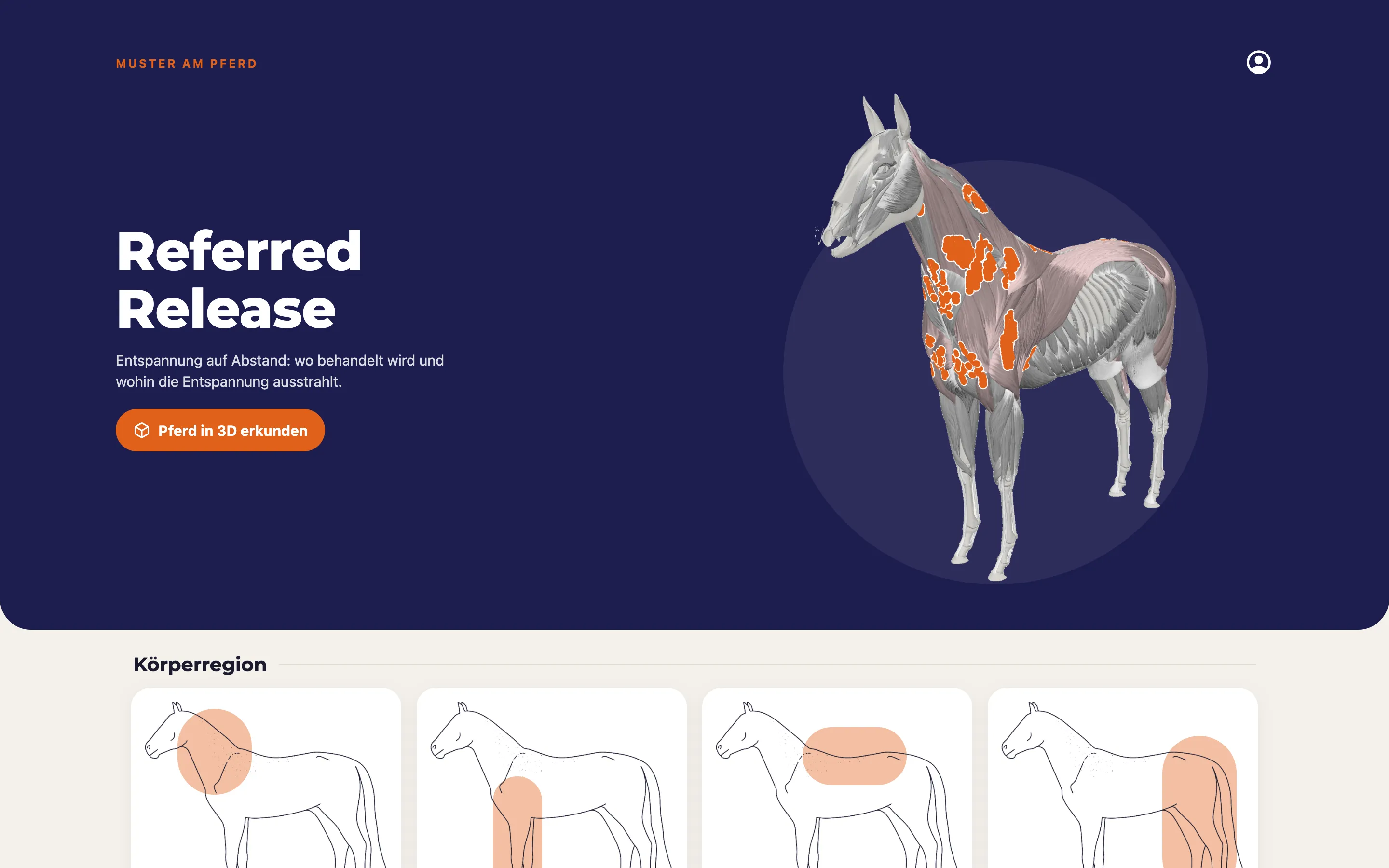
App start screen with 3D horse
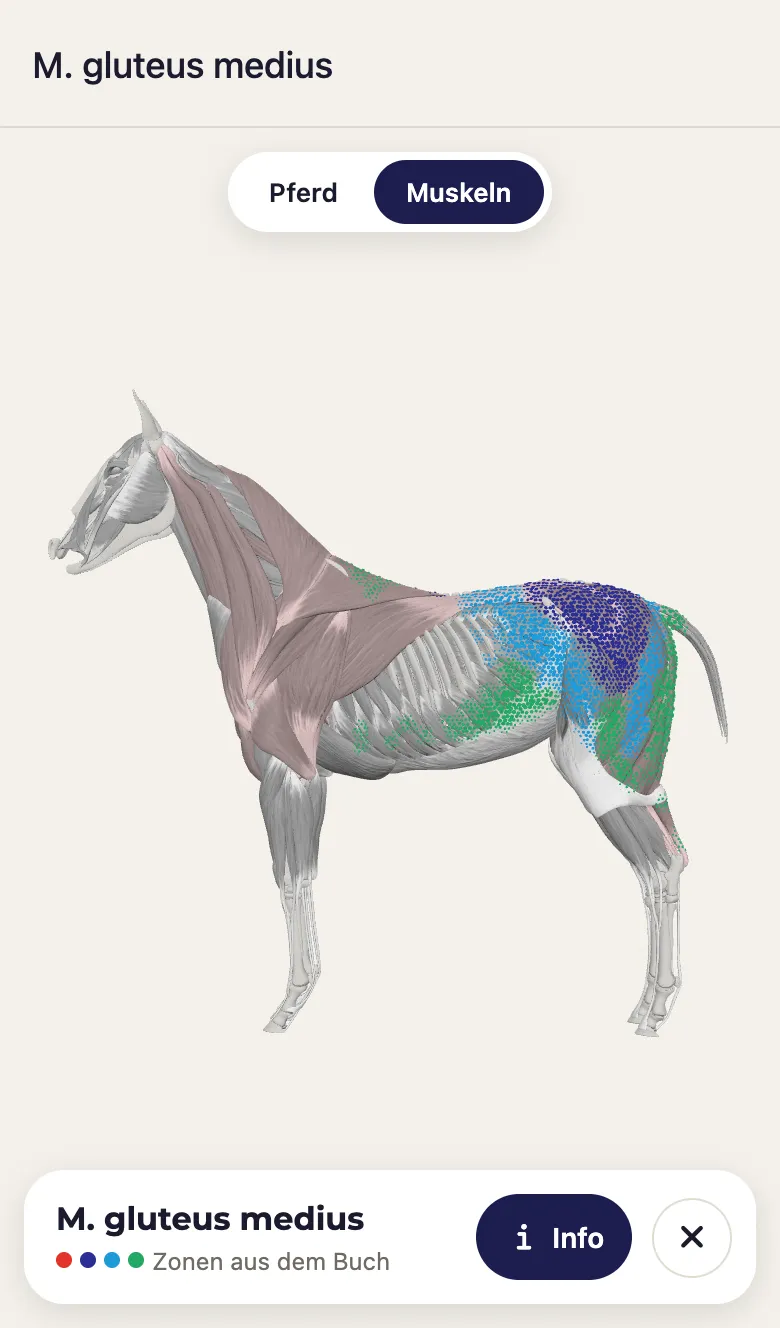
Muscle in the 3D model
Result19muscles in 3D
Result
19 muscles in 3D
Period
2026
Project
Companion app to the book with a 3D horse
Building blocks
3D horse, Muscle list, Zones from the book

Planning something similar? Tell us about it. In the free first call we’ll work out what your project needs and what it costs.

Discuss your project

Starting point

Andrea Sleutelberg-Schachinger has condensed 25 years of experience and around 18,000 treated horses into the book “Referred-Release-Muster am Pferd”. For individual muscles, it shows where to treat and in which zones the muscles then relax at a distance.

In the book, the patterns are drawings spread across separate pages. For work on the horse, practitioners lacked a format in which they can find a muscle quickly and see the zones on the body from every side.

The decision

We are turning the book into an app for iOS, Android and web. Readers buy access on the web; the app from the App Store only contains the sign-in. In the app they pick a muscle from the list or directly on the model and see the zones together with the texts from the book. On the start screen, body regions such as neck and shoulder lead to the matching muscles as image tiles.

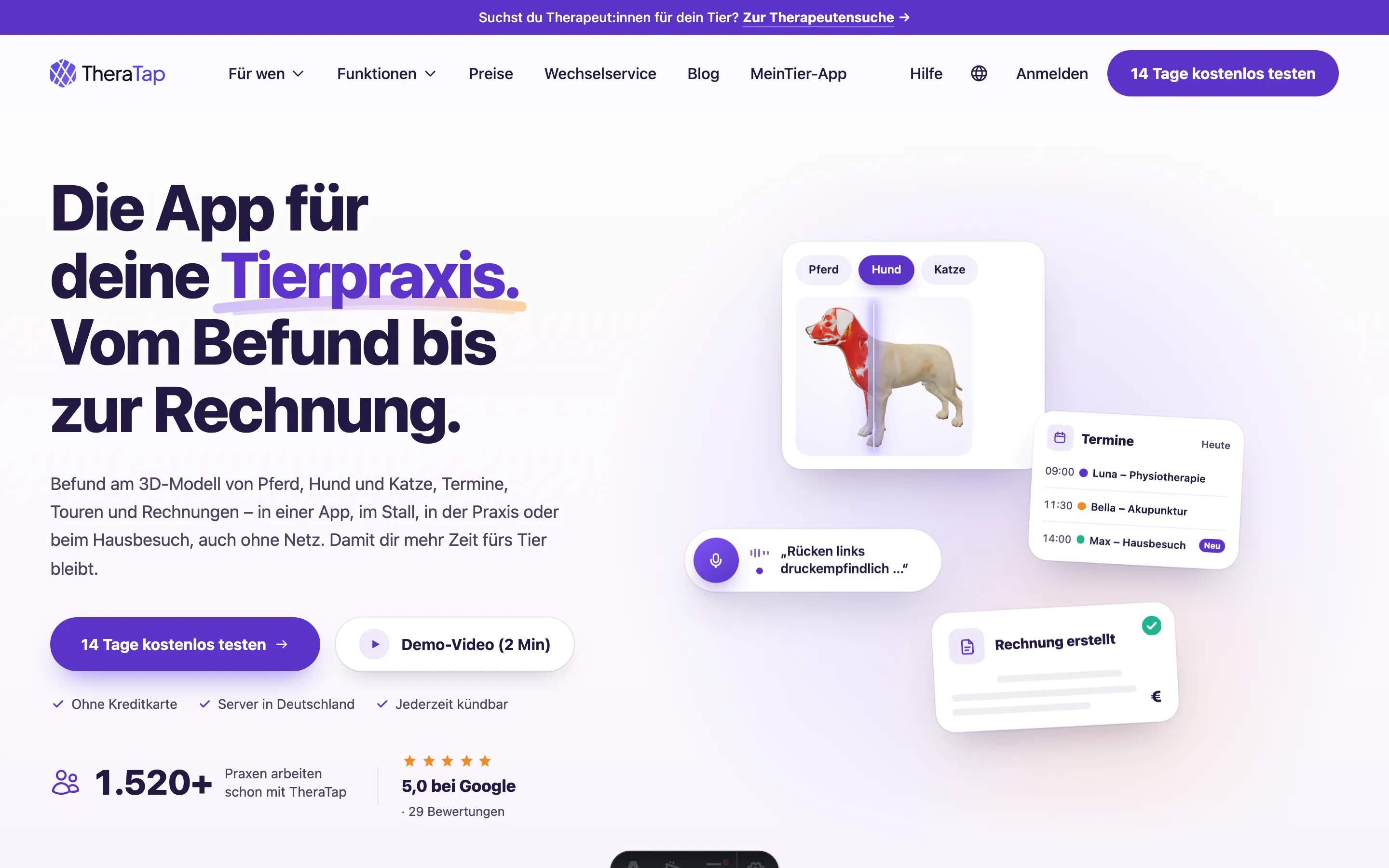
For the visuals we use the anatomical 3D model from TheraTap. Muscles, skeleton and skin are ready as a base, and the zones from the book can be transferred directly onto the surface of the model.
Approach

How we went about it.

01

Model from TheraTap

The anatomical 3D horse from TheraTap serves as the base, compressed for the app bundle.

02

Zones on the model

A script projects the zones from the book onto muscles and skin.

03

Texts from the book

Origin and insertion, physiology and pathomechanics are generated from the text version.

04

Expo and React Three Fiber

One 3D viewer on expo-gl for iOS, Android and web, with gestures to rotate and zoom.

The build

The app is built with Expo and Expo Router, one codebase for iOS, Android and web. The 3D viewer uses React Three Fiber on expo-gl: the horse can be rotated, moved and zoomed, a tap selects the muscle. It shows either the muscles over the skeleton or the horse as a grey with coat.

A script generates the texts for the 19 muscles from the text version of the book: origin and insertion, functional physiology, pathomechanics and which muscles relax along with it. Another script projects the zones from the illustrations onto the model, for the muscle view and for the skin.

The models ship compressed in the app bundle and work without loading anything from the network. Sign-in runs through a small Hono API with JWT.

App start screen with 3D horse
Start screen with the 3D horse and the zones from the book.
Muscle in the 3D model
Muscle detail on the rotatable 3D horse with the zones from the book.

In operation

The app is in development and not yet in the stores. Next come buying access on the web via Stripe, plus privacy policy and imprint for the release.

Builds and delivery run through EAS, Sentry tracks errors. Recent work focused on the 3D model: zone colours, a coat texture for the view without muscles and smoother rotation on phones.

What runs today
  • 19 muscles with texts and zones on the 3D horse
  • Views with muscles, skeleton and coat
  • App in development, web purchase to follow

3 learnings from the project

  1. 1
    Reuse what exists

    The model from TheraTap shortened the build of the 3D viewer considerably.

  2. 2
    Content by script

    Generating texts and zones from the book keeps app and book in sync.

  3. 3
    Test on the phone

    Smooth rotation only shows on real devices; in the simulator much feels faster.